



GramBase Logo
GramBase
Back to Blog
#Strategy #Monetization #Telegram #Stars #Crypto

Telegram Stars vs USDT: Why Sellers Should Offer Both

Kai | GramBase

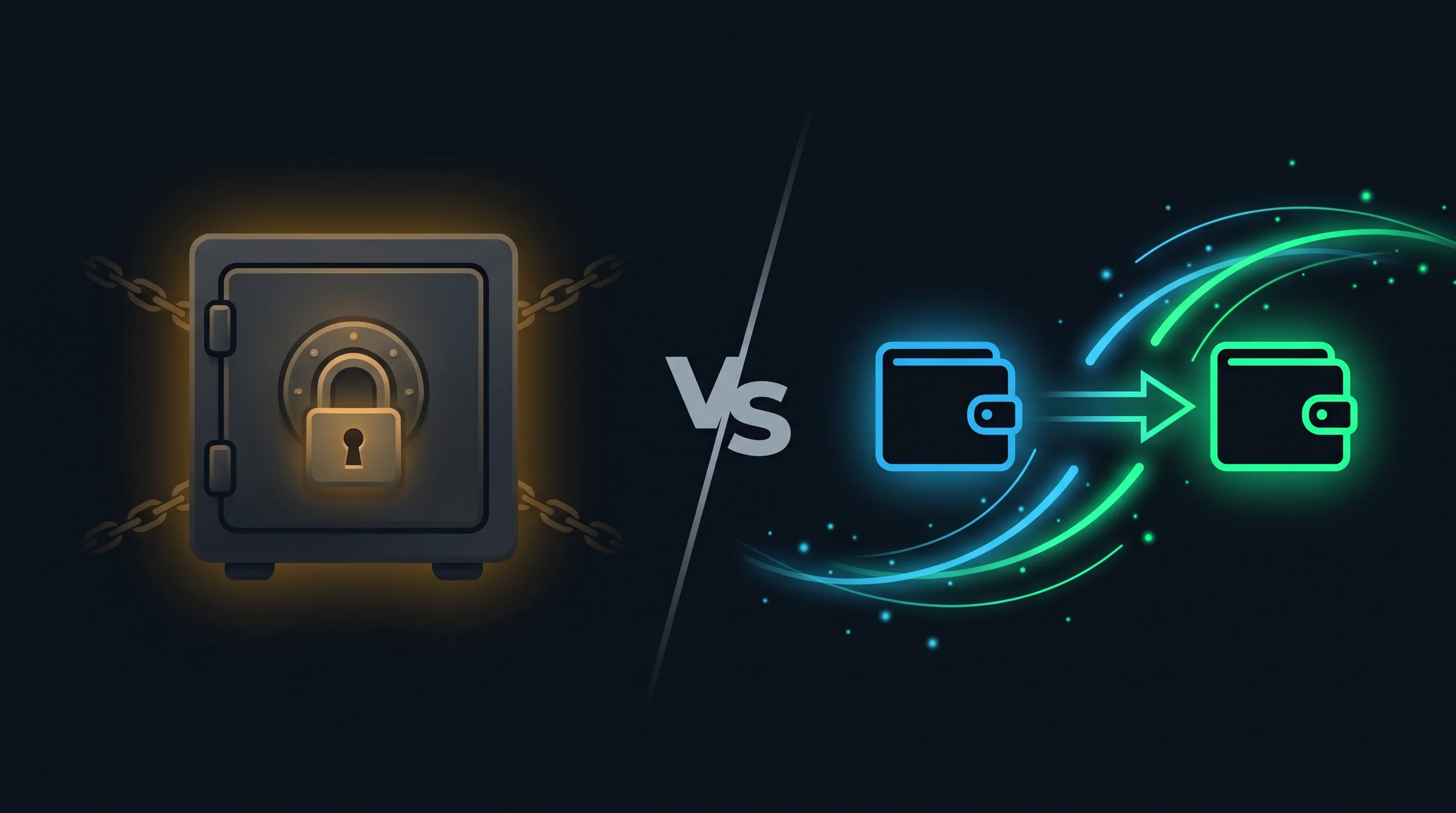
Telegram Stars and USDT shown as two routes into one Telegram storefront

The useful answer to Telegram Stars vs USDT is usually “offer both.” Stars removes wallet setup from the first purchase. USDT gives crypto-native buyers a direct wallet route and gives sellers a different cost structure. Forcing the whole audience through either one creates avoidable drop-off.

The business decision is not which payment method wins in the abstract. It is which buyer should see which rail, at what price, for which product. GramBase now models that decision directly: Telegram Stars and Crypto can coexist on the same product with independent prices.

Telegram Stars vs USDT in one table

Decision factorTelegram StarsUSDT
Best initial buyerNew or non-crypto Telegram userBuyer who already has a wallet and stablecoins
Payment contextTelegram-native Stars flowWallet payment in USDT
Seller pricingWhole-number native Stars amountSeparate crypto price
Mobile platform economicsApp-store costs can reach 30%No mobile in-app currency purchase is required
Settlement pathTelegram balance and its withdrawal routeStablecoin payment route to the configured wallet
Main advantageLower buyer learning costBetter fit for margin-sensitive and crypto-native sales
Main riskPlatform and withdrawal dependencyWallet ownership and network familiarity

Telegram Stars optimizes for the buyer who wants to pay without learning crypto; USDT optimizes for the buyer who already uses a wallet and the seller who cares about direct stablecoin economics. A mixed audience therefore has two different conversion problems, not one payment-method problem.

For the mechanics, fees, and withdrawal rules behind Stars, use our Telegram Stars guide. For a wider comparison including cards, bots, and other approaches, use the Telegram payments guide. This article stays focused on the dual-rail business decision.

What Telegram Stars is best at

Telegram Stars is Telegram’s in-app currency for digital goods and services. A buyer can use a familiar Telegram balance rather than acquire a stablecoin, choose a network, and connect a wallet. That removes several unfamiliar decisions from checkout.

This matters most near the top of the customer relationship:

  • A first paid download from a creator the buyer has just discovered.
  • A low-priced piece of premium content.
  • Access to a bot feature or digital service.
  • A purchase promoted inside a Telegram community where leaving the app would break momentum.

Stars does not make pricing economics disappear. Mobile app stores can take a 30% share when users acquire in-app currency, and earned Stars follow Telegram’s withdrawal rules. The seller must account for that cost instead of describing Stars as a free payment rail.

The trade is straightforward: Stars can buy conversion by removing buyer-side work. That is often rational for an entry product. It is less attractive when the product price rises and the platform cost consumes a meaningful part of gross margin.

What USDT is best at

USDT is a dollar-pegged stablecoin used across several blockchain networks. For a Telegram seller, its strongest audience is not “everyone.” It is the buyer who already holds USDT and knows how to send it.

That buyer does not need the convenience layer that Stars provides. Asking them to buy an in-app currency first may add cost without removing meaningful friction. USDT is therefore a strong fit for:

  • Crypto, trading, and Web3 communities.
  • Higher-priced digital products.
  • Repeat buyers who already know the seller.
  • Offers where margin matters more than a one-tap first purchase.

USDT has its own friction. The buyer must use the correct wallet and network, and a newcomer can hesitate at those choices. A seller who offers only USDT may save on payment economics yet lose buyers before payment because the setup feels unfamiliar.

That is the mistake in a one-rail strategy: it treats payment cost as the only variable. A cheaper rail that a buyer will not use has no economic advantage.

Why “pick one” is the wrong strategy

Payment strategy has two costs:

  1. Processing and platform cost, which affects what the seller keeps.
  2. Checkout friction, which affects how many buyers finish.

Stars and USDT sit on different sides of that tradeoff. Stars can reduce checkout friction for non-crypto users while exposing the seller to app-store and platform economics. USDT can improve unit economics for wallet-ready buyers while adding a wallet requirement for everyone else.

Suppose you sell a $10-equivalent entry product and a $100 advanced product. The same payment policy does not need to govern both. Stars may earn its cost on the entry product if it converts a first-time buyer who would otherwise leave. On the advanced product, a stablecoin option may matter more because the absolute platform cost is larger and the buyer has more reason to tolerate one extra step.

This is not a claim that one threshold works for every business. It is a pricing framework: compare the incremental margin cost of Stars with the incremental conversion it produces for the buyer segment and product tier.

The dual-rail model: acquisition and margin

A practical dual-rail model assigns a job to each payment method:

Funnel stageBuyer statePrimary jobUseful rail
DiscoveryDoes not own cryptoComplete the first purchaseStars
ActivationWants a small digital item nowKeep the transaction inside TelegramStars
ExpansionAlready trusts the sellerOffer an economically efficient choiceUSDT
High-value purchasePrice makes platform cost materialProtect unit economicsUSDT, while retaining Stars if demand justifies it

The model does not require hiding either option. It gives the seller a reason for offering both and a way to evaluate results by product instead of arguing about payment ideology.

GramBase implements the model at the product level. The seller can enter a native Stars amount and a separate crypto price. The Stars price is what the buyer pays for a Stars order; it is not recalculated from the crypto price at checkout.

GramBase product pricing with a native 500 Stars amount and Crypto disabled

This is the simplest version of the model: a Stars-only digital product at ⭐500. Crypto can also be enabled on the product, with each payment rail keeping its own price.

How to price Stars and USDT independently

Start with the value of the product, then price each rail with its own constraints.

Set the Stars price as a native amount

Choose the whole-number Stars amount the buyer will actually be charged. Do not present a currency estimate as a guaranteed conversion rate. Stars purchase prices and seller realization can vary with platform, region, and Telegram’s withdrawal economics.

Set the USDT price for the wallet-ready buyer

Choose the stablecoin price based on the offer, margin, and audience. Do not assume the Stars number should mechanically move whenever the USDT price changes.

Review each product tier separately

An entry product may justify a larger convenience cost than a premium product. A community can also behave differently from a crypto trading audience. Review actual purchase behavior by product and rail rather than setting one global payment rule.

Independent pricing is not needless complexity. It prevents one rail’s economics from silently rewriting the other. GramBase supports this two-price setup on one product, so the buyer choice does not require duplicate listings.

What the buyer sees

In a Stars checkout, the buyer should see the native whole-number Stars total and the Telegram payment action. The product flow below shows ⭐500 and Pay.

Buyer checkout showing a native 500 Telegram Stars total and Pay action

The buyer sees an unambiguous native ⭐500 total and a clear Pay action. When both rails are available, each option keeps its own explicit amount.

For buyers offered both rails, the choice should stay comprehensible. Use plain labels, keep the amounts explicit, and avoid implying that Stars and USDT settle through the same system. They solve different buyer problems and follow different payment paths.

When you should still offer only one rail

Offering both is not a ritual. A single rail can be the right choice when the audience is genuinely uniform.

Choose Stars-only for a digital entry product when nearly every buyer is new to crypto and simplicity is more important than payment margin. GramBase supports a Stars-only digital product without a crypto price or crypto Payment Profile.

Choose USDT-only when the entire audience is demonstrably wallet-ready, such as a tightly focused stablecoin or trading community, and Stars demand is negligible. Keep in mind that “most members discuss crypto” is weaker evidence than “buyers already complete wallet payments.”

Offer both when your audience is mixed, when you sell several price tiers, or when first purchases and repeat purchases have different friction. That is the common case for creators expanding beyond a crypto-native core.

A seller’s rollout checklist

  1. Segment the audience into wallet-ready and non-crypto buyers.
  2. Identify the entry offer where checkout friction hurts most.
  3. Identify the higher-value offer where payment cost hurts most.
  4. Set native Stars and USDT prices independently.
  5. Check the buyer-facing amount for each rail.
  6. Publish one product link rather than splitting demand across duplicate listings.
  7. Review purchases by rail and product tier before changing the strategy.

If you need the setup steps rather than the strategy, follow how to accept Telegram Stars without coding.

Frequently asked questions

Are Telegram Stars better than USDT?

Telegram Stars are better for buyers who value an in-Telegram payment experience and do not already use crypto. USDT is better for wallet-ready buyers and margin-sensitive sales. A mixed audience is usually better served by offering both.

Can I accept Telegram Stars and USDT on the same product?

Yes. GramBase models Telegram Stars and Crypto as independent product payment rails. The seller sets a native whole-number Stars price and a separate crypto price, and the available checkout options use those amounts.

Does Telegram take 30% of Stars revenue?

The 30% figure is primarily an app-store cost associated with mobile in-app purchases, not a simple Telegram transaction fee deducted when a buyer pays a bot. The effective seller economics also depend on how Stars are acquired and withdrawn. Use the full Stars fee analysis before setting prices.

Should I use Stars for subscriptions?

Stars can reduce payment friction for a subscription buyer, but the seller should weigh renewal behavior, withdrawal rules, and platform economics. Compare that with the direct stablecoin route for buyers who already hold USDT; do not choose solely from the checkout screen.

Why should Stars and USDT have separate prices?

They have different units, buyer acquisition paths, and seller economics. Independent pricing keeps the native Stars amount as the Stars charge and prevents a change to the crypto price from silently changing what a Stars buyer pays.

Give each payment rail a job

Stars and USDT are not redundant. Stars can turn a curious Telegram user into a first-time buyer. USDT can serve the buyer who already has a wallet and protect economics on larger transactions.

If those buyers coexist in your audience, offer Telegram Stars and USDT/USDC on the same GramBase product. Set each price deliberately, then let real buyer behavior tell you where each rail earns its place.

Recent Posts

View all

Start Selling on Telegram Today

One link to sell products and memberships. Checkout and delivery stay inside Telegram.

Start Selling