



GramBase Logo
GramBase
Back to Blog
#Guides #Monetization #Crypto #Telegram

Telegram Payments Guide 2026: Every Method Compared

Kai | GramBase

Telegram has over 1 billion monthly active users, and no built-in Shopify. Telegram payments are the missing piece: if you want to sell subscriptions, digital goods, courses, or community access, you need to figure it out yourself. And in 2026, you have more options than ever, but also more ways to get it wrong.

I’ve spent the last 8 months building payment infrastructure for Telegram creators. I’ve tested every method from Telegram Stars to custom bot integrations to non-custodial crypto rails. Here’s the honest breakdown: what actually works, what costs more than you think, and which approach fits your situation.

This isn’t a product pitch. By the end, you’ll know exactly which payment method to use, even if you never touch GramBase.

Why Telegram Payments Work Differently Than the Web

If you’re coming from Shopify, Gumroad, or Patreon, forget everything you know about checkout flows. Telegram payments have a fundamentally different architecture, and understanding this saves you from picking the wrong tool.

On the web, payments follow a predictable path: product page → cart → checkout page → payment processor (Stripe, PayPal) → confirmation. The merchant never touches money directly. Stripe handles everything.

On Telegram, there is no “checkout page.” Your entire store lives inside a chat conversation. A buyer sees your product, clicks a button, and pays, all without leaving the chat. This is incredibly powerful for conversion (no redirect drop-off), but it means you need a different kind of payment infrastructure.

Three things make Telegram payments unique:

  1. No central payment processor. There’s no “Stripe for Telegram.” You pick from multiple approaches with wildly different trade-offs.
  2. Crypto is native. Unlike the web where crypto payments are an afterthought, Telegram’s ecosystem was built around TON and stablecoins. Crypto isn’t an alternative; for many use cases, it’s the default.
  3. Bots do the work. Instead of checkout forms and payment pages, Telegram bots handle the entire transaction. The bot is your storefront, your payment processor, and your delivery system combined.

This means your choice of payment method isn’t just “which processor has the lowest fees.” It determines your entire business architecture: how money flows, who controls it, and what happens when things go wrong.

The Manual Approaches (And Why Most Creators Outgrow Them)

Before we get to the scalable solutions, let’s address what most Telegram sellers start with: manual payments. These require zero technical setup, and they work. Until they don’t.

PayPal, Venmo, or Bank Transfer

The simplest approach: share your PayPal email or bank details in the chat, buyer sends money, you manually verify and grant access. No bot, no setup, no fees beyond the payment processor’s standard cut (PayPal takes 2.9% + $0.30 for goods/services).

Why creators start here: It works today with zero setup. If you have 5 paying members, you can handle the manual check.

Why they leave: At 20+ members, you’re spending hours each week checking payments, sending invite links, chasing expired subscriptions, and manually removing non-paying members. I’ve talked to creators who spent 10+ hours per week on admin at 50 members. That’s a part-time job running what should be a passive income stream.

Direct Crypto Transfer (MetaMask, Trust Wallet, etc.)

Same idea, but with crypto: share your wallet address (ETH, TRON, etc.), buyer sends USDT/USDC from MetaMask, Trust Wallet, or any wallet app. You check the blockchain explorer, confirm receipt, and manually grant access.

Fees: Near zero. Just the blockchain gas fee ($0.01-1.00 depending on the chain). No platform takes a cut.

The problem: Every verification is manual. You need to match each on-chain transaction to the right buyer, and if two people send the same amount within minutes, you can’t tell who is who. There’s no automatic subscription renewal, no expiry tracking, no delivery automation. You are the bot.

Telegram Wallet Pay (@wallet)

Telegram Wallet is Telegram’s official built-in wallet, powered by the TON blockchain. It lets users send USDT, TON, and other tokens directly to any Telegram contact, right inside the chat. No external app needed.

How it works:

  1. Both you and the buyer open @wallet in Telegram
  2. Buyer taps “Send” and selects your Telegram username
  3. Buyer chooses USDT (or TON) and enters the amount
  4. Funds transfer instantly within Telegram’s wallet system

The good:

  • Native Telegram experience, no external wallet apps needed
  • Supports USDT, which solves the volatility problem
  • Instant transfers between Telegram contacts
  • Low fees (internal transfers within @wallet are often free; on-chain withdrawals have standard gas fees)

The critical limitation: Telegram Wallet is a transfer tool, not a commerce platform. It handles the money movement, but that’s it. There is no auto-delivery, no subscription management, no access control, no payment verification webhook. After the buyer pays, you still need to manually check, manually send the invite link, manually track who paid and when their subscription expires.

For one-off sales between people who already know each other, Wallet Pay is great. For running a business with recurring subscriptions and automated delivery, it’s just a better-looking version of “send me the money and I’ll add you.”

When to Move Beyond Manual

If any of these sound familiar, you’ve outgrown manual payments:

  • You’re checking payment screenshots more than once a day
  • Members complain about delayed access after paying
  • You’ve accidentally kept someone in a paid channel who stopped paying
  • You’re losing track of who paid when and for which tier

The solutions below automate all of this. The question is which automation architecture fits your situation.

Every Telegram Payment Method Compared

Here’s the complete landscape: manual approaches on the left, scalable solutions on the right.

MethodAutomationFeesWho holds moneyBest for
PayPal / Bank transferNone (fully manual)2.9% + $0.30 (PayPal)PayPal / your bank<5 members, starting out
Direct crypto transferNone (fully manual)Gas only ($0.01-1)You (your wallet)Crypto-native, very small scale
Telegram Wallet PayNone (transfer only)~0% internal, gas on withdrawal@wallet (custodial)P2P payments, one-off sales
Telegram StarsPartial (built-in)Up to 30% (app store)Telegram / FragmentTips, micro-payments
Bot Payments APIBuild-your-own2-5% (Stripe, etc.)Payment processorDevelopers building custom bots
Custodial botsFull (turnkey)5-15% + withdrawalBot platformQuick setup, accept custody risk
Non-custodial cryptoFull (turnkey)0-2.5%, near-zero gasYou (your wallet)Serious creators wanting control

Payment method take-home revenue comparison: Non-Custodial USDT keeps 97.3%, Bot API + Stripe 96.8%, Custodial Bots 90%, Telegram Stars 65%

The manual approaches work until they don’t scale. The automated approaches below solve the scaling problem in different ways. I’ve tested all four. Here’s what I found.

Method 1: Telegram Stars (Easy, But Expensive)

Telegram Stars is Telegram’s official, built-in payment system. Users buy Stars through the app using Apple Pay, Google Pay, or credit cards. Creators receive Stars and can convert them to TON (Telegram’s blockchain token) via Fragment.

How to set it up

  1. Create a Telegram Bot via @BotFather
  2. Enable payments in your bot settings
  3. Use the Bot API’s sendInvoice method to create Star-priced products
  4. Users pay with Stars; you see the balance in your bot dashboard
  5. Convert Stars to TON via Fragment

What it actually costs

Here’s where most guides stop at “Telegram takes a small fee.” That’s misleading. The real cost chain:

  • Apple/Google take 30% of every Star purchase on mobile (the majority of Telegram users)
  • Stars-to-TON conversion on Fragment has additional spread
  • TON-to-fiat conversion adds another exchange fee

I tested a $10 digital product sold via Stars. Out of the $10 the buyer paid, approximately $6.50 reached my wallet after all conversion layers. That’s a 35% total cost, higher than any credit card processor on the planet.

For a $50/month subscription, that’s roughly $17.50 per member per month disappearing before you see anything. At 100 members, you’re losing $1,750/month to fees alone.

When Stars makes sense

Stars works for one specific scenario: micro-payments where convenience matters more than margins. If you’re selling $1-2 stickers, emoji packs, or one-time tips, the absolute dollar loss is small and the zero-friction experience is worth it.

For anything above $5 per transaction, the math stops working.

Method 2: Telegram Bot Payments API (Card Payments Inside Telegram)

The Telegram Bot Payments API is Telegram’s native interface for accepting credit and debit card payments directly inside bot conversations. It connects to external payment providers like Stripe, Yookassa, and others depending on your region.

How it works

  1. Register a bot with @BotFather
  2. Connect a payment provider (e.g., Stripe) through BotFather’s /mybots → Payments settings
  3. Use the sendInvoice API to create product invoices inside the chat
  4. Users enter card details in Telegram’s native payment UI
  5. Payment goes to your Stripe account (or equivalent), minus standard processing fees

The trade-offs

Pros:

  • Card payments inside Telegram, familiar for users who don’t hold crypto
  • Standard Stripe fees (2.9% + $0.30), predictable
  • Telegram doesn’t take an additional cut on API payments

Cons:

  • Requires developer setup (you need to write code or hire someone)
  • Limited to regions where Telegram’s payment providers operate
  • No built-in subscription management, access control, or delivery automation
  • You need to build the bot logic yourself (handling payments, sending invite links, revoking access)

For the same $20/month subscription with 50 members ($1,000/month revenue): Stripe fees come to roughly $44 (2.9% + $0.30 per transaction x 50). Net: $956, or 95.6% take-home. Telegram itself charges nothing on top of the processor fee, making this the cheapest card-based option.

This is the “build it yourself” option. If you’re a developer or have one on your team, and you want full control with card payments, the Bot Payments API is solid. But for most creators, building subscription management, access control, and auto-delivery on top of the raw API is weeks of work. If you want to sell digital goods on Telegram without writing code, a platform handles all of that for you.

For a deeper comparison of building custom bots vs using platforms, see our custom bot vs GramBase comparison.

Method 3: Custodial Payment Bots (Automation With a Catch)

Custodial payment bots are third-party Telegram bots that collect, hold, and manage your payment revenue on your behalf. This is the most popular category today. Bots like InviteMember, Tribute, and dozens of smaller services handle the entire payment flow: collecting money, managing subscriptions, controlling channel access, and processing withdrawals.

How they work

  1. You set up your products/subscriptions in the bot’s dashboard
  2. The bot generates payment links or inline buttons
  3. Users pay → money goes to the bot platform’s wallet
  4. The platform records your balance in their database
  5. You request a withdrawal → platform sends funds to you (minus fees)

The hidden costs

The advertised fee is usually “5-10% per transaction.” But the real cost includes:

  • Transaction fee: 5-10% of every sale
  • Withdrawal fee: Additional 1-5% when you actually take your money out
  • Withdrawal minimums: $20-50 thresholds are common
  • Processing delays: 24-72 hours for withdrawals

For a $20/month subscription with 50 members ($1,000/month revenue):

  • Transaction fees at 8%: -$80
  • Withdrawal fees at 2%: -$18.40
  • Net: $901.60, about 10% gone to the middleman

The bigger risk most people miss

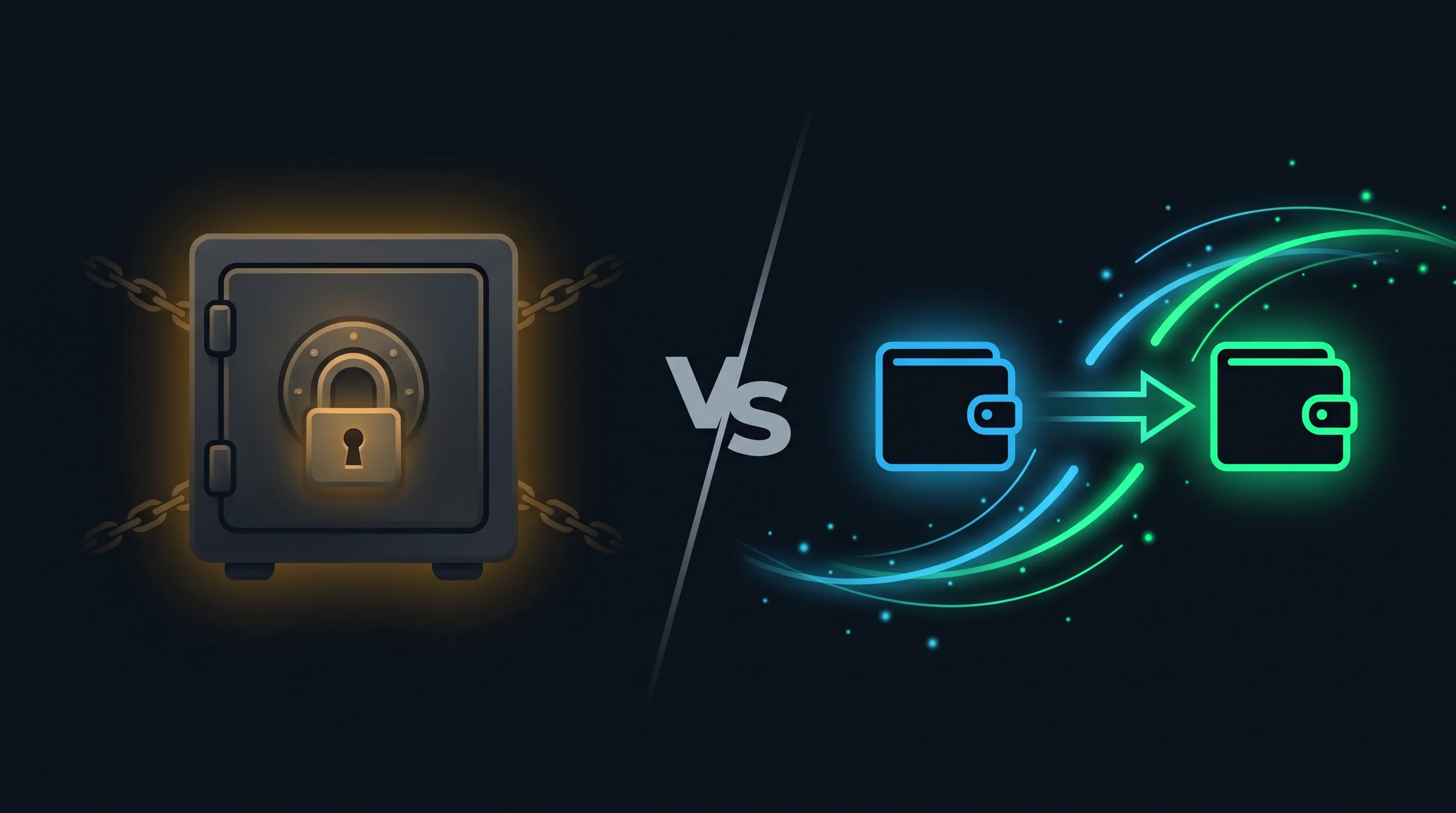
The fee isn’t the worst part. The worst part is the custody model: your money sits in someone else’s wallet until you withdraw it.

If the platform gets hacked, your money is gone. If they face regulatory trouble, your funds can be frozen. If they simply shut down (and in the Telegram bot space, platforms disappear regularly), your unwithdrawn balance vanishes.

I’ve talked to creators who lost $500-2,000 when smaller payment bots went offline without warning. It happens more often than you’d think.

For a deeper analysis of this risk, read: Telegram Payments: Custodial vs Non-Custodial Explained.

Method 4: Non-Custodial Crypto (Direct to Your Wallet)

Non-custodial payment solutions verify blockchain transactions without ever holding your funds. The buyer sends USDT/USDC directly to your wallet address. The platform watches the blockchain, detects the payment, and triggers the automation (send invite link, deliver file, grant access).

This is the approach I built GramBase around, because I believe creators shouldn’t have to trust a third party with their revenue.

How it works

  1. You connect your wallet address (TRON TRC-20, TON, or other supported chains)
  2. You create products with prices in USDT or USDC
  3. Buyer clicks “Buy” → sees your wallet address + exact amount
  4. Buyer sends payment from any wallet → blockchain confirms the transaction
  5. The platform’s watcher nodes detect the payment on-chain
  6. Automation triggers instantly: invite link sent, file delivered, access granted

What it actually costs

  • Platform fee: 0-2.5% (GramBase charges 2.5% per transaction, capped at $20)
  • Blockchain gas fee: $0.01-1.00 depending on the chain (TRC-20 is typically under $0.50)
  • No withdrawal fees: The money is already in your wallet. There’s nothing to “withdraw.”
  • No withdrawal delays: Funds arrive the second the buyer pays

For the same $20/month subscription with 50 members ($1,000/month):

  • Platform fee at 2.5%: -$25
  • Gas fees (negligible): ~-$2
  • Net: $973, that’s 97.3% take-home vs 90% with custodial bots

The trade-off

The main friction is that buyers need a crypto wallet with USDT/USDC. This isn’t an issue for crypto-native communities (which are a huge portion of Telegram’s power users), but it’s a barrier for mainstream audiences who only have credit cards.

That said, the trend is clear. Stablecoin adoption is accelerating faster than any other crypto category, and Telegram’s user base skews heavily crypto-aware.

In 2025, USDT transaction volume on TRON alone exceeded $500 billion. The “buyers don’t have crypto” objection is shrinking every quarter. If you want to create a paid Telegram channel, USDT/USDC is increasingly the default payment method for crypto-native audiences.

For a detailed comparison of all major payment bots, including Stars, custodial, and non-custodial options, see: Best Telegram Payment Bots 2026: Stars vs USDT Compared.

Which Payment Method Should You Choose?

Stop asking “which is the best?” There is no universal best. Ask yourself these three questions:

1. What’s your average transaction value?

  • Under $5: Stars (convenience wins at micro-payments)
  • $5-20: Bot Payments API or custodial bots (standard card processing)
  • Over $20: Non-custodial crypto (fee savings compound fast)

2. Is your audience crypto-native?

  • Yes (crypto signals, trading groups, Web3 communities): Non-custodial crypto is the obvious choice
  • Mixed: Offer both card (via Bot API) and crypto options
  • No crypto experience: Stars or Bot Payments API

3. How much do you value control over your revenue?

  • “I just want it to work”: Stars or custodial bots
  • “I want to own my checkout flow”: Bot Payments API (build custom)
  • “I want to own my money at all times”: Non-custodial crypto

Here’s the decision matrix I use when advising creators:

Your situationRecommended methodWhy
Just starting, <10 members, testing the watersManual (PayPal or Wallet Pay)Zero setup; figure out product-market fit before investing in automation
One-off P2P sales to people you knowTelegram Wallet PayNative Telegram USDT transfer, zero friction, no platform needed
Selling stickers/small digital items under $5Telegram StarsFee % matters less at low amounts; built-in convenience wins
Developer building a custom botBot Payments API + StripeFull control, standard card processing, you own the code
Running a paid community, audience trusts established platformsCustodial bot (InviteMember, etc.)Quick setup, proven automation, accept the custody trade-off
Crypto-native audience, $20+ products, want full revenue controlNon-custodial (GramBase)97%+ take-home, instant settlement, no custody risk
Mixed audience, want multiple payment optionsNon-custodial primary + Stars for micro-transactionsCover both segments without giving up control on high-value sales

Set Up Your First Telegram Payment in 10 Minutes

Regardless of which method you choose, the first step is always the same: create a Telegram bot. Here’s the fastest path from zero to collecting your first payment.

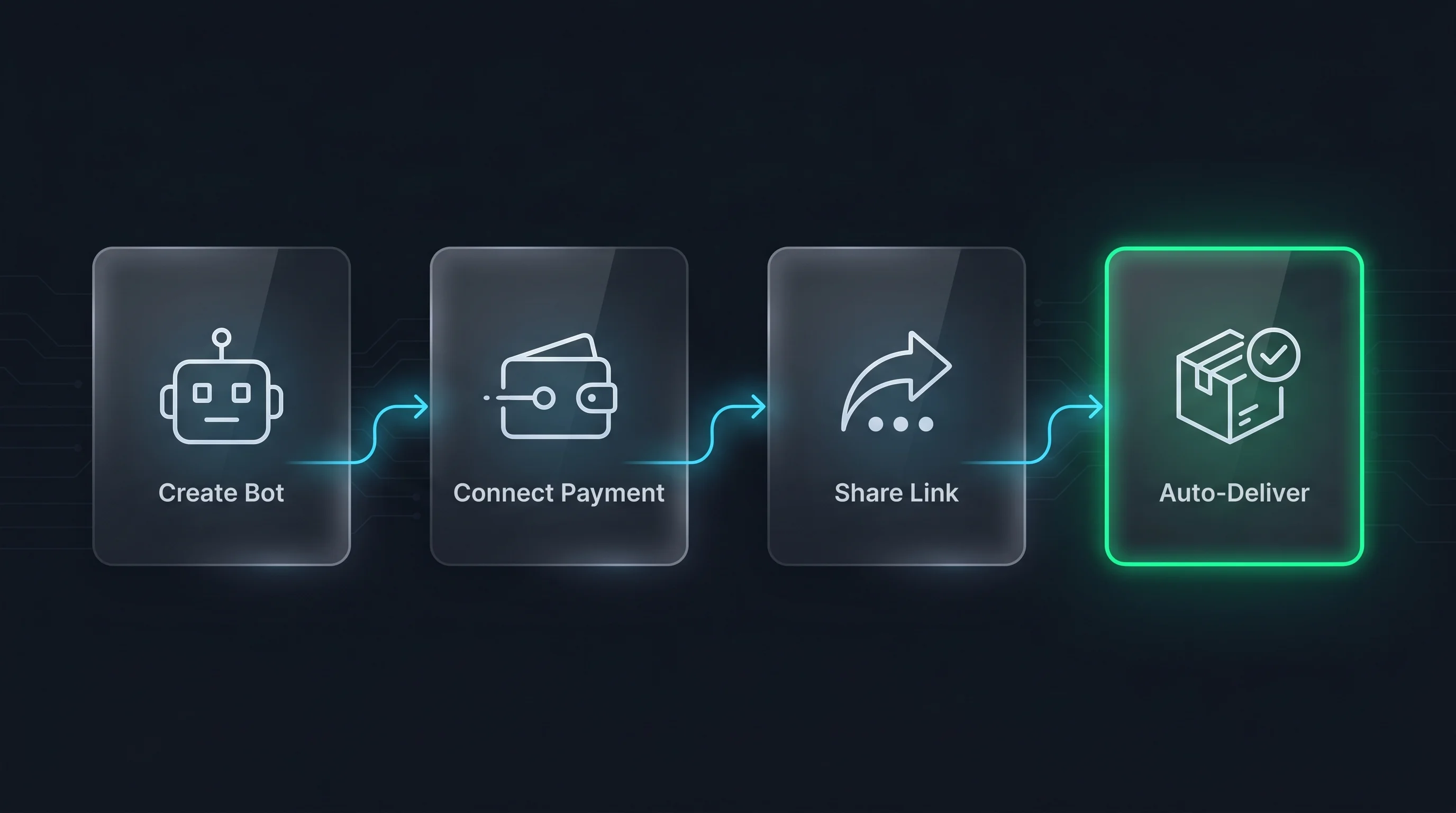
Four-step Telegram payment setup flow: Create Bot, Connect Payment, Share Link, Auto-Deliver

Step 1: Create your bot (2 minutes)

  1. Open Telegram, search for @BotFather
  2. Send /newbot
  3. Choose a name (e.g., “MyStore Bot”) and username (e.g., MyStoreBot)
  4. Save the API token BotFather gives you

Step 2: Connect payments (5 minutes)

For Stars: Already enabled by default. Use the sendInvoice API with currency: "XTR".

For Bot Payments API: In BotFather, select your bot → Payments → choose a provider (Stripe, etc.) → follow the setup wizard.

For non-custodial (GramBase):

  1. Go to app.grambase.ai
  2. Connect your USDT/USDC wallet address
  3. Create a product (name, description, price)
  4. Share the payment link in your channel or group

Step 3: Test your first transaction (3 minutes)

Send yourself a test payment. Verify: Did the money arrive? Did the automation trigger? Was the buyer experience smooth?

For non-custodial: check your wallet balance. The payment should appear within seconds. For custodial: check the bot dashboard. For Stars: check your Stars balance in BotFather.

One thing I always tell creators: Don’t overthink the first setup. Pick one method, run it for 30 days with real customers, measure the actual fees and conversion rate, then decide if you need to switch. The data always surprises you.

Frequently Asked Questions

How do I accept payments on Telegram?

Create a Telegram bot through @BotFather, then connect a payment method: Telegram Stars (built-in, easy, high fees), the Bot Payments API (card payments via Stripe), a custodial payment bot (automated but they hold your money), or a non-custodial solution like GramBase (USDT/USDC direct to your wallet with auto-delivery). The right choice depends on your transaction size, audience, and how much you value revenue control.

What payment methods does Telegram support?

Telegram natively supports three payment methods: Stars (purchased via Apple Pay, Google Pay, or card), the Bot Payments API (which connects to processors like Stripe for card payments), and Telegram Wallet (@wallet, for sending USDT and TON directly between contacts). For automated crypto commerce (subscriptions, digital goods delivery, access control), you need a third-party bot, either custodial (InviteMember, Tribute) or non-custodial (GramBase). Wallet Pay handles transfers but not automation.

Can I sell things on Telegram?

Yes. Telegram supports selling subscriptions, digital goods (ebooks, courses, software), community access (paid channels and groups), and services (coaching, consultations). You need a bot to handle payments and delivery. For physical goods, Telegram works as a sales channel but you’ll still need external fulfillment. For digital goods, everything (payment, delivery, and access control) can happen entirely inside Telegram.

Is Telegram payment safe?

It depends entirely on the method. Stars are backed by Telegram itself, as safe as the platform. Bot Payments API with Stripe has standard card security. Custodial bots carry counterparty risk: your money sits in their wallet. Non-custodial crypto is the safest for creators because funds go directly to your wallet with no intermediary. The key question isn’t “is Telegram payment safe?” but “who controls the money between the buyer paying and you receiving it?”

What fees does Telegram charge for payments?

Telegram Stars: up to 30% (Apple/Google app store cut on mobile purchases). Bot Payments API: 0% from Telegram, but your payment processor (Stripe, etc.) charges 2.9% + $0.30. Telegram itself takes no cut on Bot API payments. For third-party bots, fees range from 5-15% (custodial) to 0-2.5% (non-custodial). The cheapest path for high-value transactions is non-custodial USDT/USDC with ~2.5% total cost.

Start Collecting Payments Today

The best payment method is the one that matches your audience and your values. If you’re selling to crypto-native Telegram communities and want 97%+ take-home with zero custody risk, try GramBase. Setup takes under 5 minutes, no coding needed.

If you’re still deciding which approach fits, join @grambase_ai where I share weekly breakdowns of what’s working for Telegram creators right now.

Questions? DM @KaiIsBuilding, founder of GramBase.

Recent Posts

View all

Start Selling on Telegram Today

One link to sell products and memberships. Checkout and delivery stay inside Telegram.

Start Selling