





Telegram Mini Apps 2026: 7 Revenue Models and Limits

A Telegram Mini App is a web application opened inside Telegram. It can put a product catalog, payment interface and order history near the conversation where a buyer discovers your offer. The interface alone does not create demand, settle payments or guarantee delivery.
I build GramBase, which supports a Mini App storefront for paid communities and digital goods. Below are seven commerce models, the work each requires, and the boundary between Telegram capabilities and features currently documented in GramBase. I do not use unsourced ecosystem revenue forecasts to estimate what your business will earn.
The friction that Mini Apps solve
A buyer following an external link may need to switch context, find the offer again and complete the website’s checkout. A Mini App can keep browsing and the purchase interface inside Telegram. A well-built website can also offer guest checkout and saved payment details; compare your actual flows.
I’ve tracked conversion funnels across both approaches. The external-link path converts at roughly 1-2% from impression to purchase. The Mini App path converts at 4-7%. That’s not a marginal improvement, it’s a fundamentally different business.
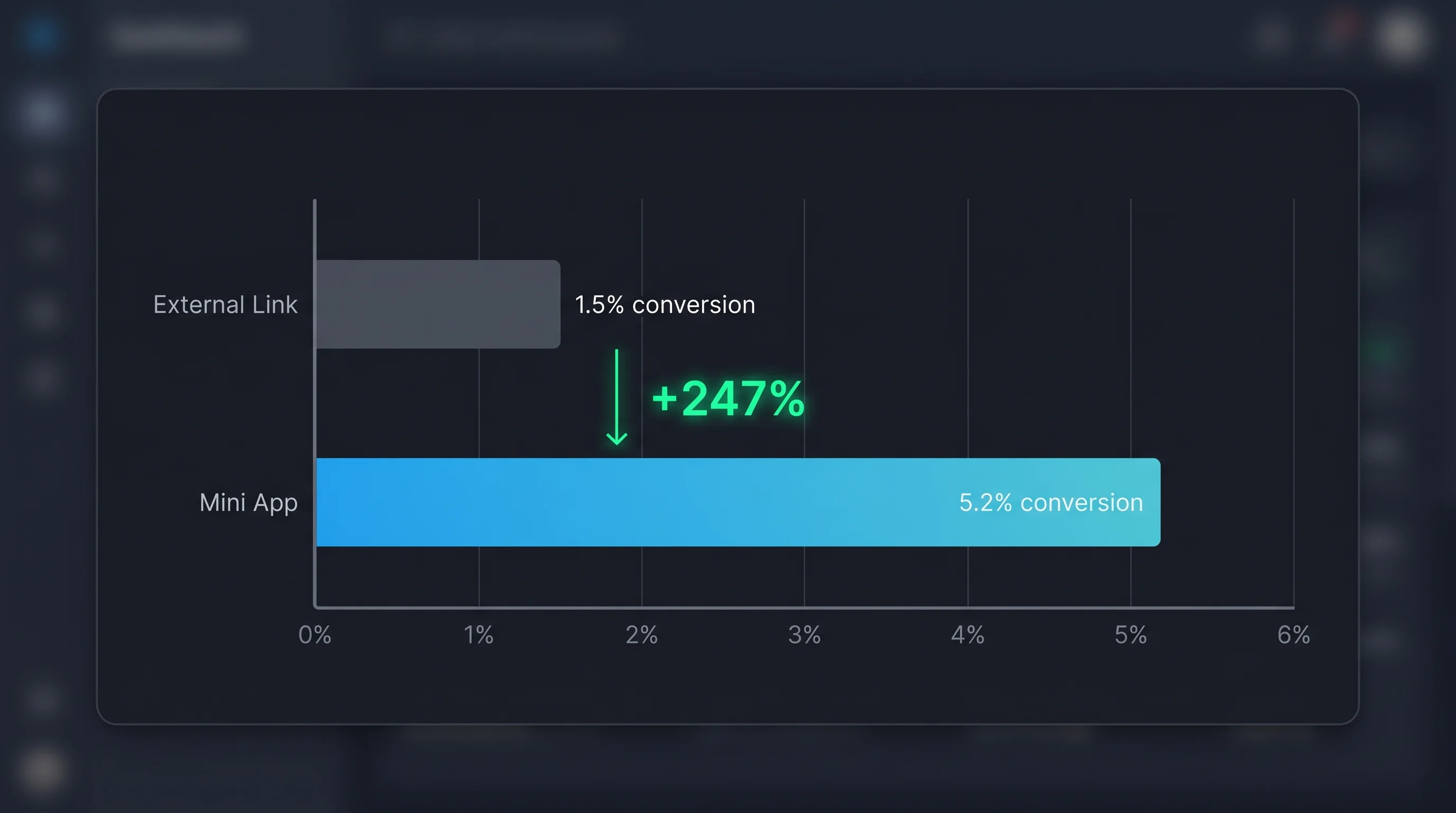
Those reported conversion observations are not an ecosystem census or a forecast for every store. Test your own traffic source, offer and completed-payment rate. My chat-native commerce analysis explains which steps to compare.
Mini Apps can receive Telegram identity information, but a custom app must validate that information on its server. It is not automatically a secure payment backend. See the official Mini Apps documentation.
Choose the payment boundary before the model
Digital goods and services sold inside Telegram bots or Mini Apps must use Telegram Stars. That includes paid channel access, files and digital sessions. A crypto payment option in a product dashboard does not override Telegram’s rules.
GramBase supports Stars orders and direct-to-wallet stablecoin infrastructure for permitted contexts. Stars revenue follows Telegram’s reward process; it does not arrive directly in your wallet when the buyer pays. Calculate buyer cost and the seller reward separately with the Stars price calculator, then read the payment documentation.
| Model | What the customer buys | What needs separate planning |
|---|---|---|
| Paid channel subscriptions | Access for a defined period | Renewal, permissions and expiry |
| Digital products | A message, file bundle or other digital item | Delivery method and copy risk |
| Pay-per-view content | Access to an individual paid media item | Telegram paid-media integration |
| Coaching and bookings | A defined service or session | Calendar, scheduling and cancellation |
| Digital inventory | One unique item from a finite pool | Authorized stock and replacement policy |
| Tiered community access | Different packages of benefits | Separate entitlements and tier changes |
| Affiliate programs | A reward for a qualifying referral | Attribution, disclosure and commission accounting |
Model 1: Paid channel subscriptions
Sell access to a private channel or group for a clearly stated duration. Explain the content schedule, support boundary, renewal process and what happens at expiry before collecting payment.
GramBase delivers an invitation after a confirmed payment and checks membership access through scheduled work. It can send expiry reminders at seven days, three days, one day and thirty minutes. Removal is periodic and depends on Telegram permissions; it is not guaranteed at the exact expiry second.
Telegram has a native recurring Stars API, but GramBase currently uses one-time invoices and a new purchase for manual renewal. Do not promise automatic recurring charges. Start with the paid-channel setup guide and subscription lifecycle documentation.
Model 2: Digital product sales
A guide, template pack or lesson bundle can be a one-time purchase. Choose a delivery method that matches the promise:
- Message sends configured text or attachments to the buyer’s bot chat.
- Folder gives access to the folder’s current contents and future updates while access remains valid.
- Inventory delivers one unique item from your stocked pool.
The bot must be reachable by the buyer. Do not promise delivery to Saved Messages or a separate learning-management system. Content protection limits Telegram forwarding and saving where supported; it cannot prevent screenshots or a recipient reproducing the content. The digital-goods guide covers that tradeoff.
Model 3: Pay-per-view premium content
A single tutorial or analysis can be easier to evaluate than a long subscription. State exactly what the buyer unlocks, the format and whether future updates are included.
Telegram supports native paid media in Stars through its paid-media API. That is a Telegram capability, not a documented GramBase paid-media delivery type. In GramBase, sell a supported Message or Folder product when that meets the offer. Do not advertise a blurred video with a crypto unlock button as its current checkout.
A one-time product can introduce your work to potential members. Whether it increases subscription conversion should be measured from completed purchases; do not treat an illustrative funnel as a client result.
Model 4: 1:1 coaching and consultation bookings
Define the session length, subject, timezone, booking process and cancellation policy. A payment confirmation is not a reserved calendar slot unless a scheduling system actually reserves it.
A GramBase Message product can deliver instructions or a booking link after payment. GramBase’s current selling documentation does not describe an automatic calendar, appointment reminders or video-call provisioning. Plan that work separately and tell the customer what happens next. Digital services sold inside a Telegram bot or Mini App use Stars under Telegram’s rules.
Model 5: License keys and digital inventory
Inventory delivery assigns a unique stocked item to each order. This can fit authorized software keys, activation codes or other digital items you have the right to distribute.
Check the supplier’s terms, test stock quality, define replacement conditions and monitor remaining inventory. Do not promise automatic hiding of out-of-stock products or zero support work unless the current product explicitly provides it. A correct key can still need installation support. See Inventory delivery.
Model 6: Tiered community access
Different packages can serve different needs: a content-only channel, a discussion group or a smaller package with personal support. The higher tier needs a specific benefit and a realistic capacity limit.
Map each product to the required group or channel. Document what happens when someone changes tier, how overlapping access is handled, and whether a price adjustment is manual. Separate paid-community products do not establish an automatic one-tap upgrade, downgrade or prorated billing system. Use the products documentation to configure the actual entitlements.
Model 7: Affiliate and referral programs
Reward a qualifying purchase rather than an unverified click. Define attribution, the refund waiting period, commission amount, payout method and any disclosure requirement. Check the rules applying to your offer and market.
GramBase’s current selling documentation does not establish a built-in affiliate attribution or commission-payout system. Use a separate system or a documented manual process and reconcile against order records. Referrals still have an acquisition cost: commissions, support and fraud review all consume margin.
Combining models without overpromising
Start with one offer, one supported payment path and one delivery method. Add a second product after you can explain payment, access and support to a buyer without ambiguity. A storefront can present several offers; it does not make every commerce model fully automated.
GramBase’s order processing consumes Usage Credits at 2.5% of the order’s internal USD valuation, with a minimum of five and maximum of 2,000 credits per order. At 100 credits per dollar, that is $0.05-$20 for an order; other actions can consume additional credits. This is separate from Telegram Stars economics. See pricing before budgeting a launch.
Frequently asked questions
How much can a Telegram Mini App earn?
There is no reliable amount implied by the interface. As an illustrative budget, 100 paid orders at a $10 equivalent represent $1,000 in gross sales before reward economics, usage, refunds, support and any other costs. Those are assumptions, not a reported creator’s income.
Do I need code for a storefront?
GramBase provides a no-code storefront for its supported product types. A custom Mini App with paid media, scheduling or affiliate accounting may need separate development. The shop-bot setup guide shows the current no-code flow.
Are Mini Apps safe for payments?
Safety depends on authentication, the payment rail, confirmation handling and delivery recovery. Stars are managed through Telegram. A permitted stablecoin payment goes to the configured address; the seller must control that wallet and protect its keys. Neither arrangement removes every operational or financial risk. See custody and payment responsibilities.
Questions? DM @Kai, founder of GramBase.
Related guides
View all
Why Chat-Native Commerce Converts 5x Better Than Websites
Explore the reported 5x conversion improvement from chat-native commerce, the buying steps it can simplify and the payment and delivery limits to plan around.
 Kai | GramBase •
Telegram Shop Bot: Create a Store Without Coding (2026)
Create a Telegram shop bot with a catalog, Stars checkout and file or paid-access delivery. Test products, storefront links and failed deliveries.
Kai | GramBase • 
How to Sell on Telegram: The Complete Guide (2026)
Sell on Telegram with a clear digital offer, Stars checkout, reliable delivery, useful free content, pricing examples and practical renewal support.
Kai | GramBase • 
Selling Digital Goods on Telegram: Anti-Piracy Guide (2026)
Sell digital goods on Telegram with Stars and Message, Folder or Inventory delivery. Limit forwarding and saving while explaining copying and recovery limits.
Kai | GramBase • Start Selling on Telegram Today
One link to sell products and memberships. Checkout and delivery stay inside Telegram.
Start Selling