





How to Sell on Telegram: The Complete Guide (2026)

Selling on Telegram needs a clear offer, a permitted payment flow, reliable delivery and a reason for the buyer to return. A bot is part of the setup. The business is deciding what you can deliver, explaining the value and serving customers after checkout.
I built GramBase. This guide focuses on offer design, acquisition and retention; the shop-bot tutorial covers catalog setup. Digital goods/services sold inside Telegram bots and Mini Apps must use Stars, including digital access. Start with that rule before comparing fees or buyer wallet habits.
Why the relationship changes the sale
A buyer who has read your channel for weeks can evaluate an offer using more context than a first-time visitor. Telegram lets you answer questions close to the purchase and deliver a file or invite in the same app. Cold traffic and an engaged channel audience are still different populations.
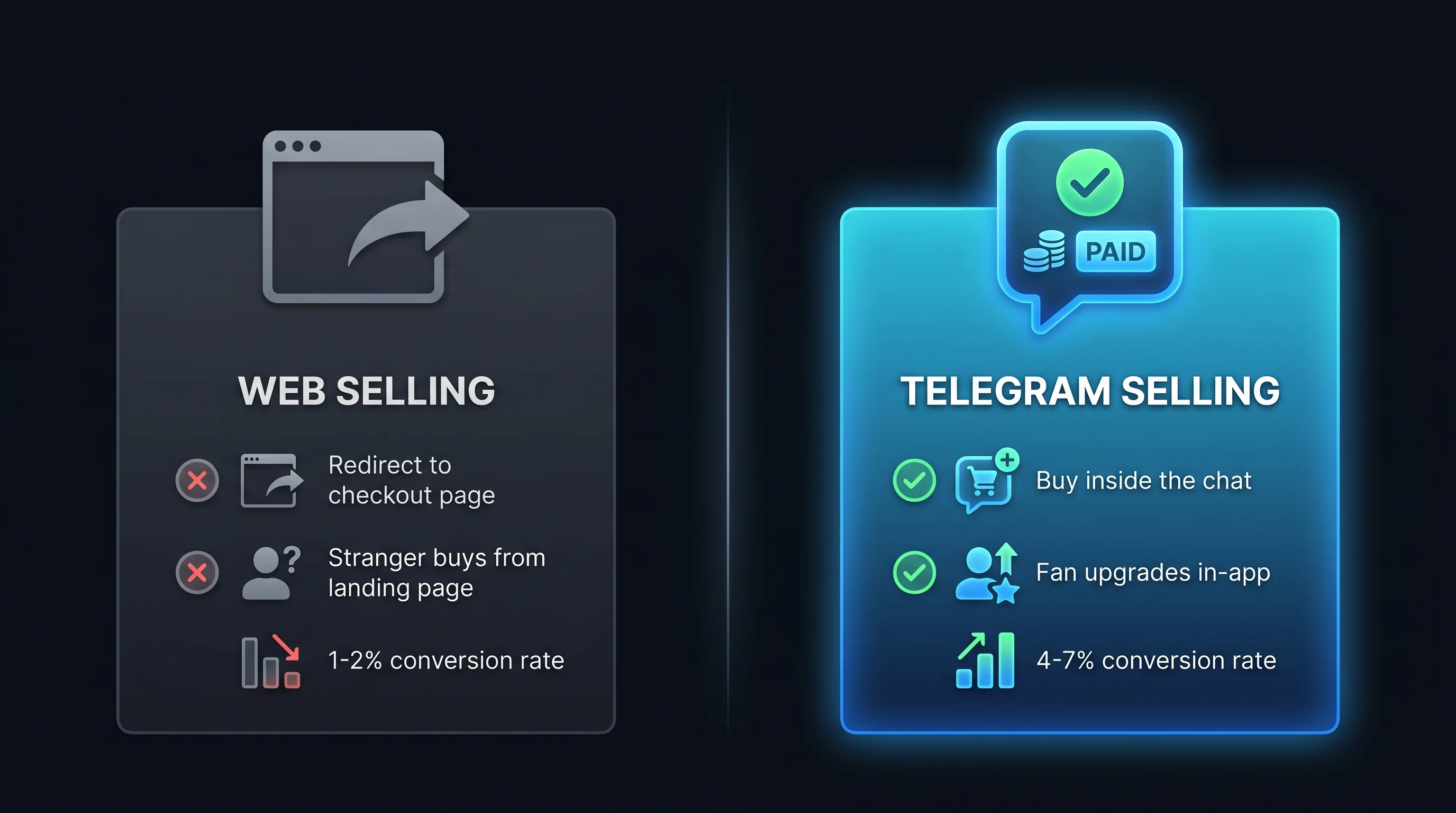
I’ve tracked conversion rates across dozens of Telegram sellers. A payment link dropped into an engaged channel converts at 4-7%. The same product listed on a standalone website with cold traffic? Under 1%. The difference is context. The buyer isn’t evaluating a product page. They’re upgrading access within a community they already belong to.
Those conversion observations do not mean acquisition is free. Content production, moderation and support consume time. They also do not establish that a payment method is allowed or that customers will renew.
For the reasoning behind the buying experience, read chat-native commerce. Keep your own traffic source and offer conditions visible when comparing outcomes.
Choose a product that fits Telegram
Paid content or a community
Research, lessons and a moderated discussion group can fit timed access. Explain the schedule and boundaries: access to a community is not a promise of profitable trades, guaranteed answers or unlimited consultation.
Channels suit publishing; groups suit member interaction. If both are included, budget the moderation workload. The paid-channel guide covers access setup and the difference between paid periods and automatic billing.
Digital files and codes
Templates, ebooks, research packs and software licenses need a specific description of format, compatibility and usage rights. Use Message, Folder or Inventory delivery. A file uses a message attachment; a code comes from inventory; a resource bundle can use a folder. Do not promise one-time download links or complete piracy prevention.
The digital-goods guide explains protection limits, and the ebook use case gives a concrete product example.
Courses, coaching and physical goods
A course can be a file bundle or private group, but that does not automatically provide learning progress, bookings or drip scheduling. GramBase currently has Digital Goods and Paid Community product types, not a separate service/physical-goods product. Evaluate specialist tooling when a calendar, contract, shipping or complex fulfillment is essential.
High-consideration services can begin in chat, but clear scope, human conversation and suitable contracting matter more than compressing checkout to two taps.
A previously reported 40% add-on purchase rate is retained as a conversion observation. It is not assumed in the revenue budget below.
Five revenue models as planning examples
The examples below are hypothetical gross-revenue arithmetic, not verified clients, typical earnings or take-home forecasts. Dollar amounts show an assumed offer value for budgeting; an in-app digital invoice must use Stars. Actual Stars rewards, refunds, tool usage, fulfillment and taxes change the result.
| Model | Illustrative assumptions | Gross arithmetic | Work to budget |
|---|---|---|---|
| Research membership | 180 members × $49-equivalent per period | $8,820-equivalent | Research, moderation, renewal and support |
| Digital catalog | 100 sales × $25-equivalent | $2,500-equivalent | Updates, file compatibility and product support |
| Peer community | 85 members × $29-equivalent | $2,465-equivalent | Facilitation, rules and moderation |
| Course bundle | 30 purchases × $99-equivalent | $2,970-equivalent | Teaching, updates, student support and refunds |
| Hybrid catalog | 120 memberships × $35-equivalent + 60 items × $30-equivalent | $6,000-equivalent | Both continuing content and one-time delivery |
Pick the model whose work you can sustain. A membership requires continuing value; a file catalog requires useful products and updates; a peer group needs facilitation rather than an archive of posts. Combining models can raise complexity before it raises income.
A previously reported free-to-paid conversion of 6% for a 3,000-follower channel corresponds to 180 purchases. That conversion figure is retained; the hypothetical revenue arithmetic above should not be read as a verified customer’s earnings.
Build the selling stack
| Layer | Next step |
|---|---|
| Offer | Set the product type, promise and access/delivery terms in Products |
| Payment | Configure Stars for the digital purchase using the no-code tutorial |
| Access | Connect private destinations and check subscription rules |
| Catalog | Add active products to a storefront |
| Support | Inspect orders and prepare customer support |
Set a whole-number Stars price. Use the Stars price/reward tool to separate buyer acquisition cost from merchant gross reward references. Telegram’s reward conditions and GramBase’s usage credits are separate. Current pricing describes the per-order 5-2,000-credit bounds and other billable actions; no per-order cap becomes a monthly cap.
A product interface with both Stars and crypto settings does not make both permitted for every offer. For the sales-context comparison, read Stars versus USDT.
From useful free content to a first sale
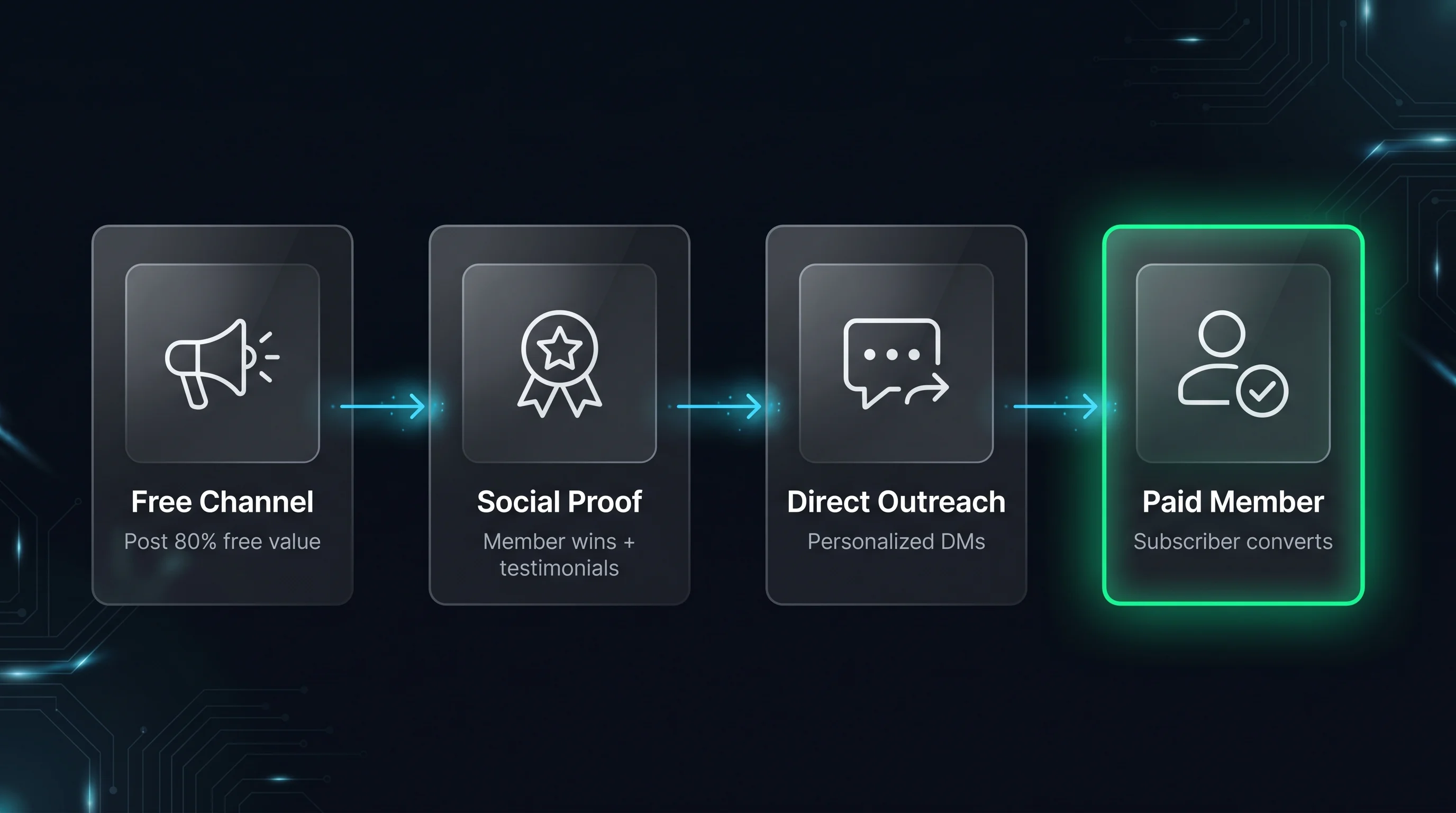
Publish a useful sample
Treat the free channel as evidence of the work, not an endless teaser. A reader should learn something even if they never purchase. Choose a publishing rhythm you can maintain, and describe how the paid offer differs: depth, organization, access or discussion.
An 80/20 free/paid split is a starting heuristic, not a universal content law. If every post withholds the answer, people have no reason to trust the paid version.
Use actual customer proof with permission
Ask for permission before sharing a testimonial, result or screenshot. Give the context necessary to understand it, and do not imply a user’s trade result or income is typical. A specific comment about a helpful template or clear lesson is often more credible than an unexplained earnings figure.
Reply to relevant interest
A buyer who asks about an offer gives you a useful conversation to continue. Refer to the question and explain the right next step; respect consent and each community’s rules instead of sending unsolicited bulk pitches.
I’ve tested this with 5 creators running channels in the $100-500/month range. Personalized DMs after engagement convert at 15-25%. Cold DMs to non-followers convert at under 2%. Those conversion observations are not permission to spam or a claim that GramBase supplies an automatic outreach feature.
After purchase: onboarding and renewal
Pin a Start Here post, describe what happens this week and show the support route. A new member facing hundreds of unorganized messages needs orientation before another sales pitch.
Match frequency to the product. A real-time research feed differs from a weekly class. Use member feedback to decide what feels useful; no universal three-to-five-post schedule guarantees retention.
GramBase sends reminders before a subscription expires, including the three-day milestone. Members renew by purchasing again; the system does not automatically re-bill them. Periodic checks attempt removal and invite revocation. Missing permissions or Telegram exceptions can require human recovery. The subscription documentation is the reference.
Keep a reason-to-renew message honest: explain upcoming content without implying a forgotten purchase automatically renews or promising a measured churn reduction you cannot substantiate.
Pricing and diagnosis
Price the work you can deliver. A low starting price can be reasonable, but an offer should still cover content, moderation and support. Tiers should have distinct benefits; lifetime access needs a sustainable definition. Preserve a real launch deadline instead of repeatedly extending false scarcity.
If people click but do not buy, inspect the offer, invoice and buyer errors. If people buy but do not receive access, inspect payment and delivery states before blaming configuration. Permission errors, blocked bot messaging, pending review and queued delivery can have different fixes. Use order and delivery records.
Switching to in-app payments has previously been described here as typically doubling completion rates. That retained conversion claim does not establish a cure for a failed invoice or justify changing the required payment rail.
If content leaks, first identify what was shared and what restriction was configured. Use available forwarding/saving limits, clear license terms and a documented infringement response. Screenshots and copying remain possible; leaked copies are not all lost purchases.
Frequently asked questions
Can I sell on Telegram?
Yes. Use an offer, payment and fulfillment system appropriate to the sales context. Digital bot/Mini App purchases require Stars. Physical goods need suitable shipping/returns infrastructure.
How much can I make?
Calculate actual buyers × price, then account for rewards, refunds, costs and tax. The example table is arithmetic, not a forecast or a claim about real anonymous clients.
Does Telegram pay me for posting?
This guide covers sales to customers, not a promise of payment for posting. Stars purchases create a Stars balance with Telegram’s reward/withdrawal conditions; they do not settle directly to a stablecoin wallet.
What should I launch first?
One offer you can explain, fulfill and support. Test it end to end, publish a useful preview and learn from actual buyer questions before expanding the catalog.
Create a tested Stars offer in GramBase when the product fit is clear. If you are still exploring business models, the Mini Apps guide separates model ideas from currently supported features.
Questions? DM @Kai, founder of GramBase.
Related guides
View all
Telegram Shop Bot: Create a Store Without Coding (2026)
Create a Telegram shop bot with a catalog, Stars checkout and file or paid-access delivery. Test products, storefront links and failed deliveries.
 Kai | GramBase •
How to Create a Paid Telegram Channel in 2026 (Step-by-Step)
Create a paid Telegram channel with Stars, bot permissions, a clear access period, manual renewal, expiry checks and a complete buyer-flow test.
Kai | GramBase • 
Selling Digital Goods on Telegram: Anti-Piracy Guide (2026)
Sell digital goods on Telegram with Stars and Message, Folder or Inventory delivery. Limit forwarding and saving while explaining copying and recovery limits.
Kai | GramBase • Start Selling on Telegram Today
One link to sell products and memberships. Checkout and delivery stay inside Telegram.
Start Selling